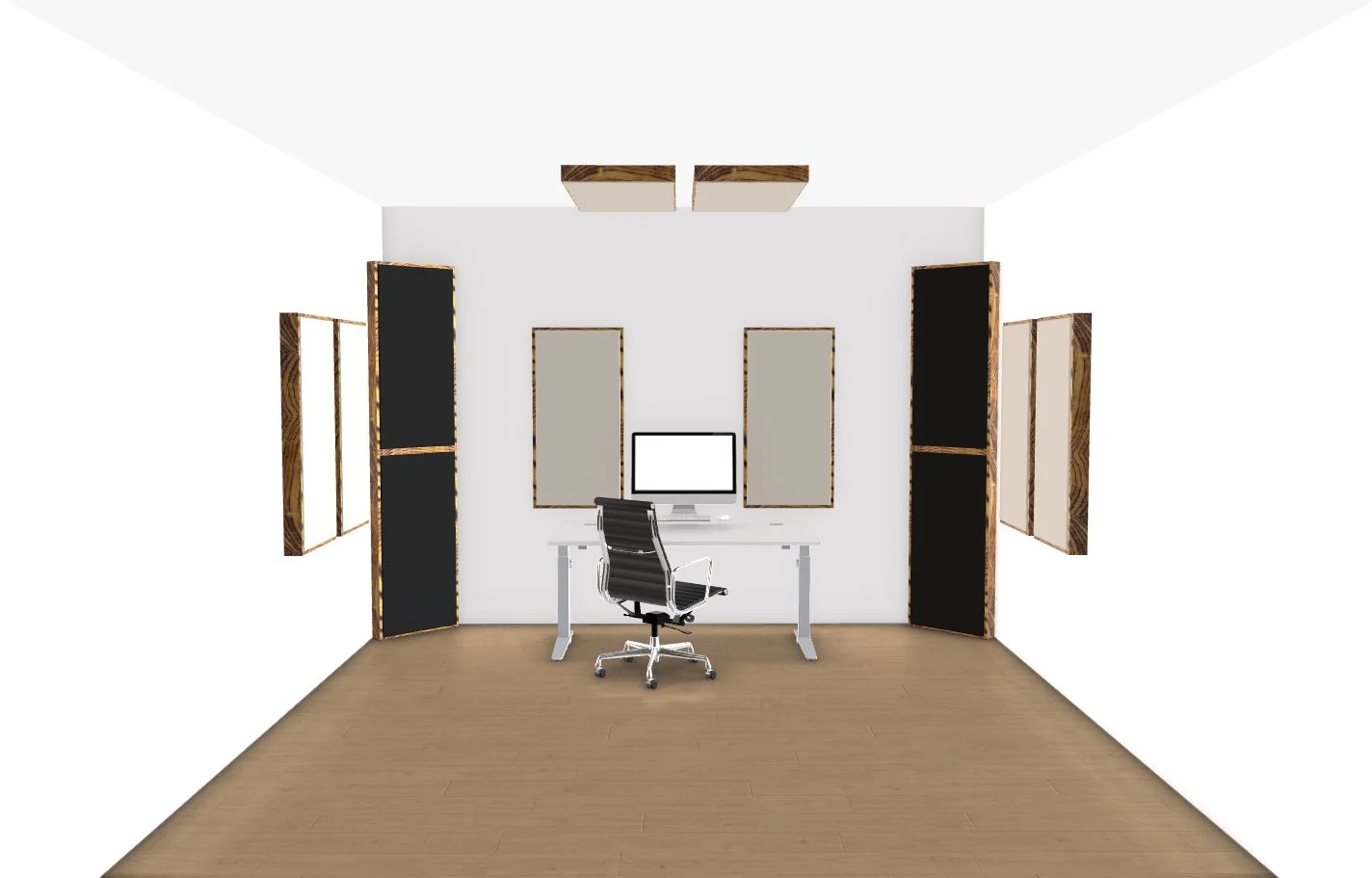
Bass traps are an essential part of improving the acoustics of any space where sound clarity is critical, especially in environments like music studios, home theaters, or any room that requires high-quality sound reproduction. While porous absorber bass traps are often used to handle a broad range of frequencies, resonant absorber bass traps provide a more specialized solution for managing low-frequency sound waves, particularly in the bass range (20Hz to 250Hz). In this article, we will explore the purpose of resonant absorber bass traps, how they function, and how they differ from other types of bass traps.
What Are Resonant Absorber Bass Traps?
Resonant absorber bass traps, also known as membrane absorbers, are designed specifically to target and absorb low-frequency sounds. Unlike porous absorbers, which rely on the porous structure of materials like fiberglass or foam to absorb sound energy, resonant absorber bass traps function by using a membrane that vibrates at specific frequencies, thus absorbing sound energy through the resonance effect.
The key difference between resonant absorbers and porous absorbers is that resonant absorbers are fine-tuned to work at certain frequencies. They are particularly effective at handling the deep bass sounds that other types of absorbers may struggle to control. This makes them highly effective in spaces that require targeted low-frequency absorption, such as in critical listening environments, home theaters, and professional recording studios.
How Do Resonant Absorber Bass Traps Work?
The principle behind resonant absorber bass traps is based on resonance. A membrane is suspended in a frame or placed over a cavity. This membrane is often made of materials such as thin plastic or metal, which vibrate when they come into contact with sound waves of certain frequencies. When sound waves at these specific frequencies hit the membrane, they cause it to vibrate, absorbing the sound energy and converting it into heat. The vibrations reduce the intensity of the sound wave, effectively “absorbing” the low frequencies.
Resonant absorber bass traps are typically tuned to target the specific frequencies causing problems in a room. The membrane is designed to resonate at a frequency corresponding to the problematic low-frequency sound waves. When these frequencies are absorbed, the overall acoustic environment becomes more balanced, and issues like boominess or muddiness are reduced.
Advantages of Resonant Absorber Bass Traps
- Effective at Lower Frequencies – Resonant absorbers are particularly effective at absorbing low-frequency sounds, which are often more difficult to manage. They are well-suited for treating frequencies below 100Hz, making them ideal for tackling the deep bass problems that can plague a room’s acoustics.
- Targeted Absorption – One of the main advantages of resonant absorbers is their ability to target specific frequencies. Unlike porous absorbers, which have a broader absorption range, resonant absorbers can be fine-tuned to address the exact frequencies that need attention, making them more efficient in controlling bass-related issues.
- Space-Efficient – Because resonant absorbers are highly effective at low frequencies, they can achieve significant sound control with relatively small amounts of material. This makes them more space-efficient compared to porous absorbers, which may require more coverage to achieve the same level of absorption.
- Improved Sound Quality – By effectively controlling low-frequency reverberations and standing waves, resonant absorber bass traps help improve the overall sound quality in a room. This is crucial in spaces where accurate sound reproduction is important, such as music production environments or home theaters.
Types of Resonant Absorber Bass Traps
Resonant absorber bass traps come in various designs, each tailored to different acoustic needs. The most common types of resonant absorbers are:
- Helmholtz Resonators – These resonators consist of a cavity (often a box or tube) with an opening that resonates at specific low frequencies. The size of the cavity and the dimensions of the opening determine the resonant frequency. Helmholtz resonators are very effective at controlling specific frequencies, especially those around 100Hz or lower.
- Membrane Absorbers – Membrane absorbers typically consist of a thin, flexible membrane suspended over a cavity. The membrane’s material, tension, and the size of the cavity all influence the frequency range the absorber will target. These absorbers are often used in spaces that require fine-tuned low-frequency control.
- Panel Absorbers – These are similar to membrane absorbers, but they are often larger and designed to absorb lower frequencies. They are typically placed on walls or ceilings and consist of a large, flexible panel that vibrates when it comes into contact with low-frequency sound waves.
Where to Place Resonant Absorber Bass Traps
For resonant absorbers to be effective, placement is crucial. Like porous absorbers, resonant bass traps are typically placed in corners where low-frequency energy tends to build up. The corners of a room are prime areas for bass buildup because sound waves naturally accumulate in these spaces.
In larger rooms or rooms with more complex acoustics, resonant absorbers can also be placed along walls or in areas where specific low-frequency problems are most noticeable. It is often helpful to use a combination of resonant absorbers and porous bass traps for more comprehensive acoustic treatment, as this can address both targeted low frequencies and broader frequency ranges.
Resonant Absorbers vs. Porous Absorbers
While both resonant and porous absorbers are effective at controlling bass frequencies, they have distinct differences:
- Frequency Range – Porous absorbers are effective at controlling a wider range of frequencies but may not be as effective at managing very low frequencies. Resonant absorbers, on the other hand, are highly effective at controlling specific low-frequency ranges but require more precise tuning.
- Efficiency – Resonant absorbers are often more space-efficient because they can absorb low frequencies with less material. Porous absorbers, while effective, typically require larger surface areas to handle the same low-frequency problems.
- Application – Porous absorbers are often used in smaller spaces or where low-frequency control is less of a concern. Resonant absorbers are better suited for environments where precise low-frequency control is necessary, such as recording studios or home theaters.
Conclusion
Resonant absorber bass traps are a powerful tool in the acoustic treatment arsenal, especially for controlling troublesome low frequencies that can otherwise distort sound clarity in a room. By using a membrane to absorb specific low-frequency sound waves through resonance, these bass traps effectively reduce issues like standing waves, boominess, and muddiness. Whether you’re outfitting a recording studio, a home theater, or any other space where sound quality matters, resonant absorbers offer targeted, efficient control of low-frequency energy, leading to a more balanced, clear, and accurate sound environment. For best results, consider integrating resonant bass traps with porous absorbers to achieve comprehensive sound treatment in your space.