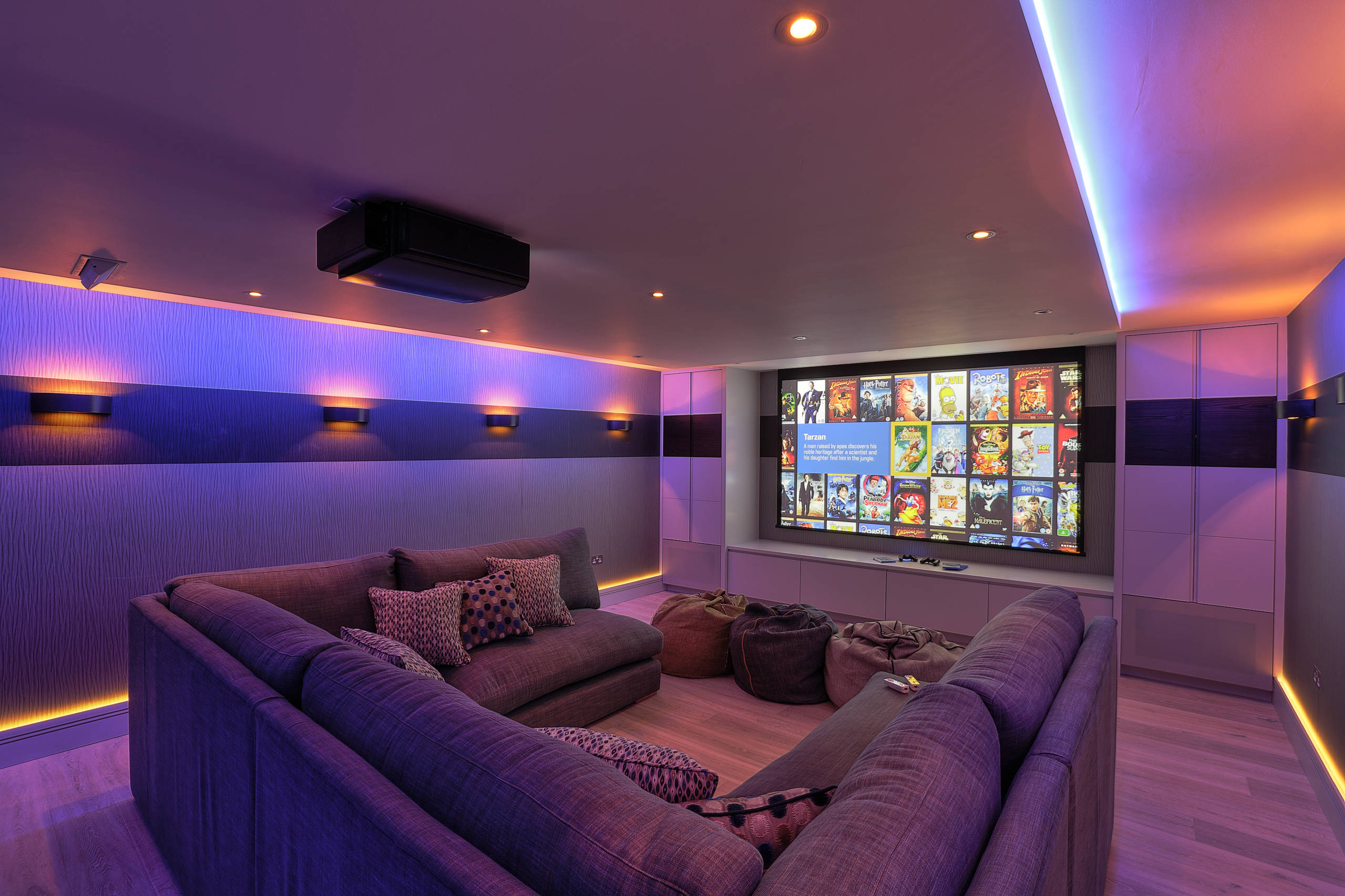
Designing a home theater involves blending aesthetic appeal with functional excellence. A well-planned setup ensures an immersive experience that rivals professional cinemas. Whether you’re converting a spare room or building a dedicated space, the key lies in balancing acoustics, visuals, comfort, and technology. Here’s a comprehensive guide to creating an ideal home theater design.
1. Choose the Right Space
Selecting the right room is the foundation of a successful home theater.
- Dedicated Space vs. Multi-Functional Room: For the best experience, opt for a dedicated theater room with minimal natural light and external noise.
- Room Shape: Rectangular rooms are ideal for sound distribution, while irregular shapes may need additional acoustic treatments.
2. Acoustic Treatments
Sound quality is as crucial as visual clarity in a home theater.
- Wall Treatments: Use acoustic panels or fabric-covered walls to minimize sound reflections.
- Carpets and Rugs: Install carpets to absorb sound and enhance warmth.
- Bass Traps: Place bass traps in corners to manage low-frequency sound waves.
3. Lighting Design
Lighting plays a pivotal role in setting the mood.
- Dimmable Lights: Install dimmable LED lights to create adjustable brightness levels.
- Ambient Lighting: Use hidden LED strips or sconces to reduce screen glare.
- Blackout Curtains: Block natural light to enhance the viewing experience during daytime.
4. Optimal Screen and Projector Setup
The screen and projector are the visual centerpiece of your theater.
- Screen Size and Type: Choose a screen size that fits the room dimensions and viewing distance. Fixed-frame screens are ideal for dedicated spaces.
- Projector Placement: Use ceiling-mounted projectors for a clean look and better alignment. Ensure the projector has sufficient brightness (measured in lumens) for the room’s lighting conditions.
5. High-Quality Sound System
Surround sound is essential for creating an immersive auditory experience.
- Speaker Placement: Use a 5.1 or 7.1 surround sound system with speakers placed strategically around the room.
- Subwoofer Position: Position the subwoofer near seating areas for impactful bass.
- Acoustic Calibration: Calibrate the audio system to optimize sound distribution.
6. Comfortable Seating
Comfortable seating enhances the overall viewing experience.
- Recliners: Invest in theater-style recliners with cup holders and armrests.
- Tiered Seating: Build platforms for multiple rows of seating to ensure clear sightlines.
- Distance from Screen: Maintain a minimum distance of 1.5 to 2.5 times the diagonal size of the screen for optimal viewing.
7. Equipment and Technology
A state-of-the-art home theater requires advanced equipment and seamless integration.
- Media Players and Streaming Devices: Choose devices that support high-resolution content and popular streaming services.
- AV Receiver: Invest in a high-quality receiver to manage audio and video signals efficiently.
- Smart Controls: Integrate smart home systems for controlling lighting, sound, and screen settings via a single device.
8. Aesthetic Elements
Make your home theater visually appealing while maintaining functionality.
- Themes: Select a theme such as classic cinema, sci-fi, or modern minimalist.
- Wall Decor: Add posters, art, or acoustic-friendly fabric to personalize the space.
- Color Scheme: Use darker colors for walls and ceilings to minimize light reflections.
9. Budget-Friendly Tips
Designing a home theater doesn’t have to break the bank.
- DIY Acoustic Panels: Create panels using inexpensive materials like rock wool and wooden frames.
- Affordable Projectors: Opt for budget-friendly projectors with decent resolution and brightness.
- Gradual Upgrades: Start with essential components and expand as your budget allows.
10. Maintenance and Upkeep
Regular maintenance ensures a consistent cinematic experience.
- Dusting and Cleaning: Keep screens, projectors, and speakers dust-free.
- System Updates: Regularly update software and firmware for connected devices.
- Inspection: Periodically check cables, mounts, and acoustic elements for wear and tear.
Conclusion
A well-designed home theater design transforms your home into a personal entertainment hub. By focusing on acoustics, visuals, comfort, and technology, you can create a space that provides unparalleled cinematic experiences for family and friends. Tailor your design to your preferences and budget, ensuring that your home theater becomes a cherished retreat for movie nights and gaming marathons alike.