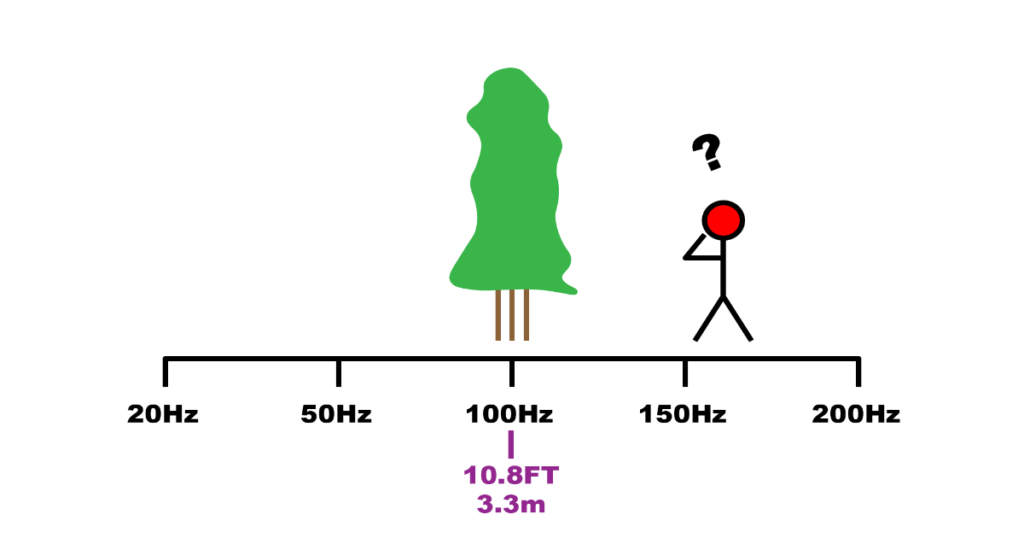
The golden ratio, approximately 1.618, has been celebrated for centuries for its aesthetic and functional harmony. In acoustics, this mathematical principle is applied to achieve superior sound quality and balance by optimizing room dimensions and proportions. Understanding the golden ratio’s role in acoustics can help in designing spaces with excellent sound characteristics, such as concert halls, studios, and home theaters.
1. What is the Golden Ratio?
The golden ratio is a proportion found in nature, art, and architecture, represented by the equation:
Golden Ratio=a+ba=ab≈1.618\text{Golden Ratio} = \frac{a+b}{a} = \frac{a}{b} \approx 1.618
This ratio ensures balance and pleasing proportions, making it invaluable in design fields, including acoustics.
2. The Golden Ratio in Acoustic Design
In acoustics, the golden ratio is used to:
- Optimize Room Dimensions:
The ratio helps avoid issues like standing waves and acoustic distortions by ensuring sound waves reflect evenly within a room. - Control Resonance:
It minimizes room modes, which are frequencies that resonate excessively due to room dimensions. - Enhance Sound Clarity:
Properly proportioned rooms reduce echoes and reverberations, improving sound quality.
3. Golden Ratio Room Dimensions
Applying the golden ratio to room dimensions involves proportioning the length, width, and height as follows:
- Height (H) : Width (W) : Length (L) = 1 : 1.618 : 2.618
For example, if the room height is 10 feet, the ideal dimensions would be:
- Width = 10 × 1.618 = 16.18 feet
- Length = 10 × 2.618 = 26.18 feet
This configuration ensures balanced sound distribution.
4. Benefits of Using the Golden Ratio in Acoustics
- Improved Sound Quality:
Balanced dimensions prevent sound imbalances, ensuring even dispersion. - Reduced Echoes and Reverberation:
Proportions derived from the golden ratio help control excessive reflections. - Minimized Standing Waves:
Proper dimensions prevent overlapping frequencies that create standing waves. - Versatility Across Applications:
Useful for home studios, theaters, and professional recording spaces.
5. Practical Applications
- Home Theaters:
Rooms designed using the golden ratio deliver immersive soundscapes with clear dialogue and balanced music. - Recording Studios:
Professional studios often rely on golden ratio dimensions to achieve flat frequency responses and minimal acoustic interference. - Concert Halls and Auditoriums:
Architects and acousticians use the ratio to create spaces with optimal sound projection and clarity.
6. Challenges and Limitations
While the golden ratio offers significant benefits, it may not always be feasible:
- Structural Constraints:
Existing spaces may not allow for exact golden ratio dimensions. - Cost Implications:
Altering dimensions to fit the ratio can be expensive. - Complex Acoustic Needs:
Some spaces require tailored acoustic solutions beyond the golden ratio.
7. Alternatives and Enhancements
When applying the golden ratio isn’t possible, other principles and tools can help:
- Acoustic Treatments:
Panels, bass traps, and diffusers enhance sound quality in less-than-ideal spaces. - Room Shape:
Irregularly shaped rooms with slanted walls can diffuse sound effectively. - Simulation Software:
Modern tools allow precise modeling of acoustic performance, offering alternatives to golden ratio dimensions.
Conclusion
The golden ratio serves as a guiding principle for achieving harmonic and balanced sound environments. By proportioning room dimensions according to this timeless mathematical relationship, acousticians and designers can create spaces that enhance sound clarity, reduce distortion, and elevate the listening experience. Whether designing a home studio or a concert hall, incorporating the golden ratio is a proven strategy for superior acoustics.